 By admin
Air quality doesn’t take a break when the office doors open. In Bengaluru’s tech parks from Whitefield to Electronic City, AQI is present with every vehicle that enters, every cab waiting at the gate, and every four-wheeler zipping through the campus. Employees breathe it, feel it, and live with it throughout their day.
Unlike long-term carbon metrics, which affect the planet slowly, air quality impacts people instantly. It influences focus, productivity, and health, making it a workplace issue, not just an environmental one.
Why Bengaluru’s Tech Parks Face a Unique AQI Challenge
Bengaluru’s tech hubs are high-density ecosystems. Thousands of employees converge in tight windows every morning and evening, relying heavily on personal vehicles, ride-hailing services, and autos.
This creates a specific problem:
- Concentrated emissions during entry and exit hours
- Limited control over individual commuting choices
- ESG commitments that remain invisible at ground level
Traditional mobility programs like shuttles or carpooling help marginally, but they rarely touch the hyperlocal pollution inside the campus itself. AQI, in other words, is felt, not reported.
Rethinking Campus Mobility: From Ownership to Shared EVs
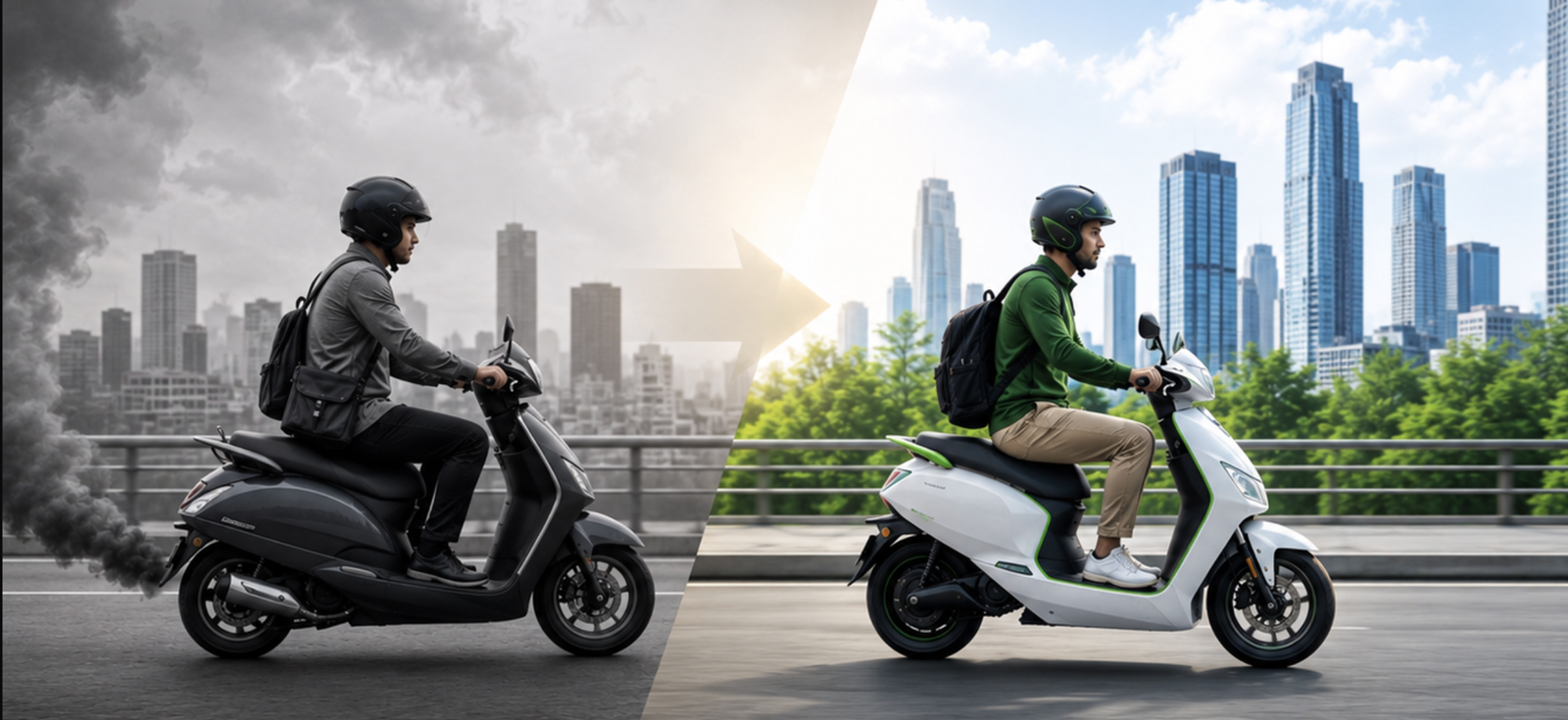
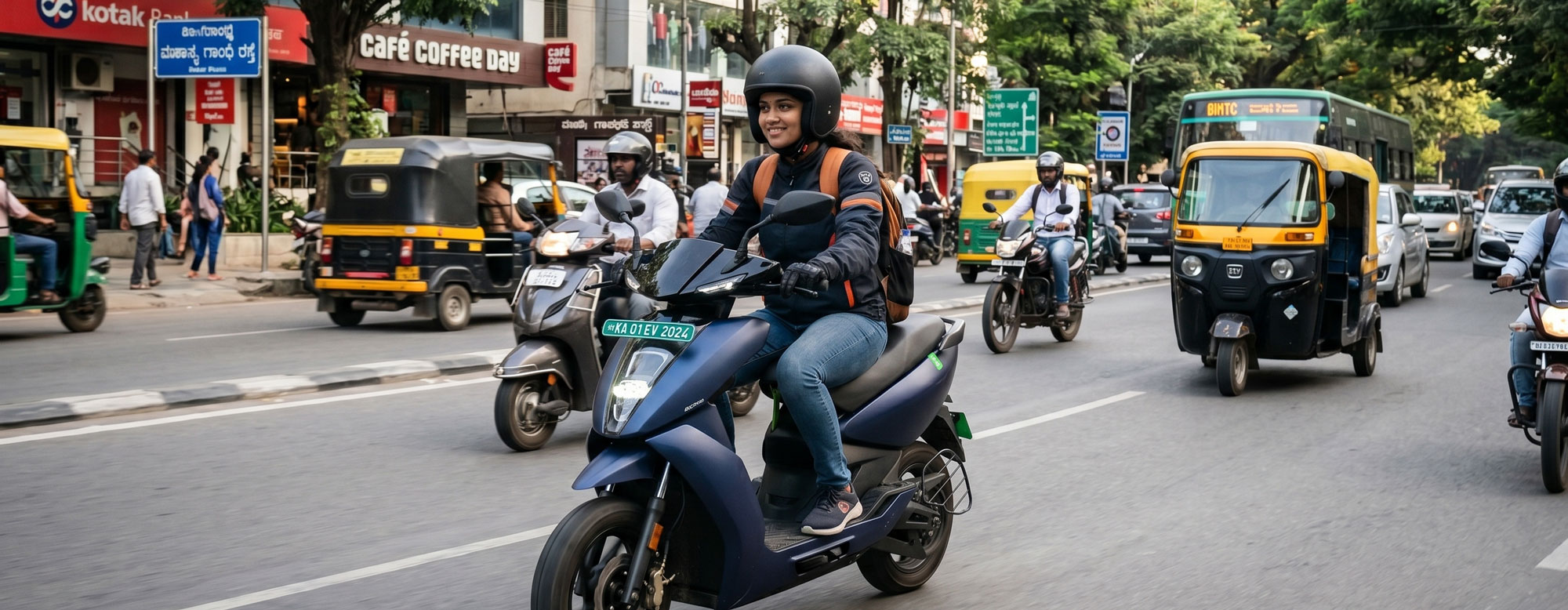
The future of cleaner air in Bengaluru’s tech parks lies in shared, community-driven electric mobility. Instead of individual fossil-fuel vehicles, employees can access EV scooters stationed inside the campus on demand, for short commutes, or even take-home use.
Let’s driEV’s model makes this possible. By treating mobility as a shared campus resource, tech parks can:
- Replace petrol and diesel trips entirely
- Offer flexible access without the burden of ownership
- Track measurable ESG impact—Scope 3 emissions avoided, kilometres logged, and local pollutant reduction
Independent studies from dense Asian cities show that a 10% increase in EV trips can reduce PM2.5 by 0.5%, ozone (O₃) by 6.3%, and overall AQI by 1.1%. In a concentrated campus environment like Bengaluru, the effect on daily employee health is tangible.
Employee Experience Meets ESG
Cleaner air isn’t the only benefit. Employees enjoy:
- Instant EV access without surge pricing or cancellations
- Flexible rental options, from short hops to take-home plans
- Vehicles for both licensed and non-licensed users
- Safer late-night mobility and reduced commute fatigue
The outcome? Well-being becomes visible, ESG metrics become actionable, and sustainability is no longer abstract, it’s something employees can experience every day.
Why Bengaluru Needs This Shift
Bengaluru’s tech parks are not just workplaces, they are mini-cities. Traffic congestion, long commute times, and air pollution are daily challenges. By adopting shared EV solutions, parks can make a measurable difference:
- Reducing AQI hotspots during peak hours
- Lowering Scope 3 emissions linked to commuting
- Enhancing employee satisfaction and retention
- Demonstrating people-first sustainability in a tangible way
Mobility is no longer just about getting from A to B. In Bengaluru, it’s about designing a healthier, cleaner, and smarter workplace. With shared EVs, tech parks don’t just talk about ESG, they make it breathable.